
Contextual article
What Is MBTI 64? 16 Types × 4 Subtypes, Not an Official List
22 min read
· By itypelab Editorial Team
· 2026-07-23
· Updated 2026-08-05
Start with the 16 × 4 = 64 calculation, then check source, subdivision rule, scoring method, and practical use before treating a 64-type result as more precise.
Best for readers who already know MBTI and want to connect it to real work, relationships, or self-observation.
This article breaks a common MBTI topic into more usable signals instead of stopping at a quick answer.
You'll leave with a clearer interpretation frame and a better sense of whether to continue into a type page, question page, or guide.
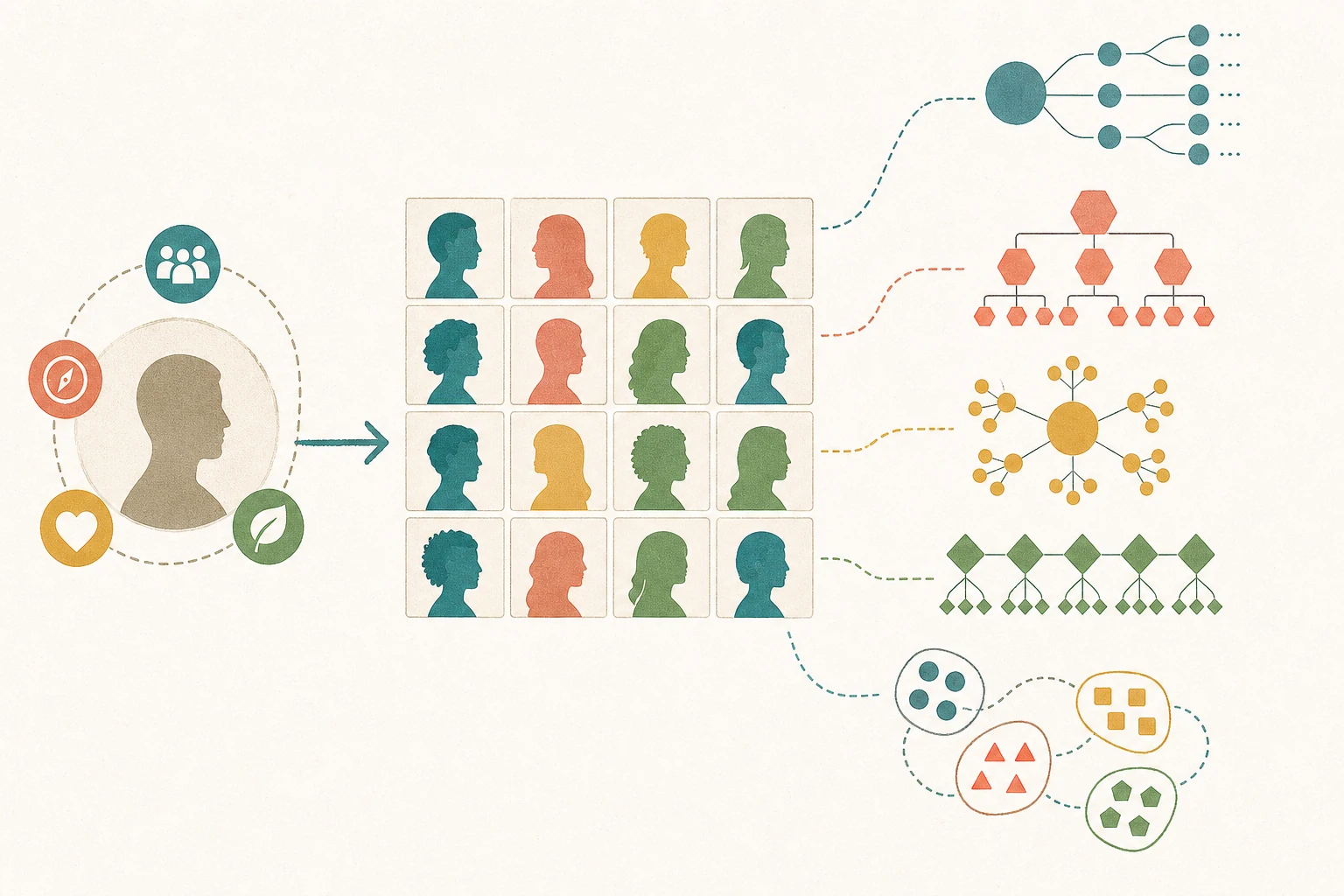
MBTI 64 usually means 16 base types × 4 subtypes = 64 labels. It is not an official Myers-Briggs type table. A site may first call you INFP, then sort that INFP into one of four subtypes—for example exploratory-expressive, exploratory-reflective, focused-expressive, and focused-reflective. Do the same under the other 15 base types and you get 64 names.
Those four names are a teaching example, not official MBTI subtypes. Real sites may split by stress response, social style, function development, or a private scoring rule. Two “MBTI 64” pages can measure different things, so the number alone does not mean four times more precision.
| If you searched… | Short answer |
|---|---|
| mbti 64 / mbti-64 | Usually 16 × 4 creator subtypes, not official MBTI |
| 64 personality types | Ask which extra dimension and scoring rule created the 64 |
| mbti 64 types / what is mbti 64 | Keep the 16 code; treat the extra label as optional detail |
Page deliverables
- A concrete explanation of how 16 base types times four subtypes produces 64 labels.
- A clear distinction between official MBTI, 16Personalities, function-based explanations, and creator-made 64-type systems.
- Three cases showing how the same “64” label can mislead in different ways.
- Four questions for deciding whether a result adds useful detail or only extra certainty.
Start with what is actually standard
The Myers-Briggs Foundation describes four pairs: Extraversion–Introversion, Sensing–Intuition, Thinking–Feeling, and Judging–Perceiving. Choosing one preference from each pair produces 16 combinations. Its overview of the 16 types does not define an official table of 64 subtypes.
Confusion often begins because several nearby ideas use similar language:
| What you found | What to check | Why it matters |
|---|---|---|
| Official MBTI material | Four preference pairs and best-fit verification | This is the reference point for the 16 codes |
| 16Personalities result | Five trait scales, including Assertive/Turbulent | Its A/T letter is not a fifth official MBTI preference |
| Cognitive-function content | Function order, development, loops, or grips | These are interpretations of type dynamics, not automatically a 64-type instrument |
| A 64-type chart | The added dimension and its scoring rule | Different creators may divide the 16 types in incompatible ways |
The 16Personalities theory page explicitly describes a five-trait model. Adding an Assertive or Turbulent suffix to each of 16 base labels gives 16 x 2 = 32 label combinations, not 64. Reaching 64 requires a four-way split under each base type or another binary distinction on top of A/T. Other creators combine MBTI codes with Enneagram, temperament, or function-development claims. The arithmetic may reach 64 while the constructs remain unrelated.
A worked example of how a 64-type result is made
The following is a teaching example, not a real assessment. Imagine a tool identifies INFP first and then asks two additional questions:
1. Under uncertainty, do you usually keep exploring or narrow the options and move forward? 2. Once an idea forms, do you develop it through outward exchange or private reflection?
Two binary questions cross into four modes:
| Base type | Teaching label | What the added label actually says |
|---|---|---|
| INFP | INFP exploratory-expressive | Keeps possibilities open and develops ideas by talking them through |
| INFP | INFP exploratory-reflective | Keeps possibilities open and develops ideas privately |
| INFP | INFP focused-expressive | Narrows direction earlier and advances it through exchange |
| INFP | INFP focused-reflective | Narrows direction earlier and forms the decision privately |
Apply that same four-way rule to all 16 base types and the tool now has `16 base types x 4 modes = 64 result labels`. That is the concrete structure behind many uses of “64 types.”
The example also shows the limit. The extra label only describes the extra rule that the publisher introduced. It does not automatically improve accuracy or reveal ability, maturity, or destiny. A different site that creates four INFP subtypes from stress responses would not be interchangeable with this table, even though both systems contain 64 labels.
| Result format | What layer it belongs to | What you still need to know |
|---|---|---|
| INFP | One base code in the standard 16-type model | Whether the four preferences are the person's best fit |
| INFP-A / INFP-T | A 16Personalities base label plus A/T | How Identity is defined, scored, and handled near a boundary |
| INFP plus one of four subtypes | A publisher's 64-type system | What the four categories mean, how scoring works, and whether results repeat |
| INFP 4w5 or another paired code | Two frameworks used side by side | What each framework explains; more letters do not automatically make a 64-type model |
Case 1: A search result promises a more precise type
Maya searches “MBTI 64” after receiving INFP twice. A page gives her “INFP-Creative-Observer” and says this is four times more precise than ordinary MBTI. The profile feels accurate, but the page never names the extra dimension or explains how answers become a subtype.
Maya should not ask, “Does the paragraph sound like me?” first. Broad, favorable descriptions often do. She should ask what was measured, whether the subtype can change with mood or role, and whether people receive counterexamples. Without that information, the extra label may be writing detail rather than measurement detail.
Case 2: A paid report changes the meaning of 64
Jon buys a report that uses four “operating modes” under every MBTI type. His colleague bought a different report whose 64 categories come from four workplace styles. Both are labeled MBTI 64. Jon assumes matching numbers mean matching systems and tries to compare their subtypes.
The comparison fails because one product claims to describe inner processing while the other describes workplace behavior. Before comparing labels, write the added axis in plain language. If you cannot finish the sentence “This system divides each type according to…,” the category is not ready to guide a decision.
Case 3: Two friends argue about who is the deeper version
Leah and Sam both identify with ENTP. Leah's 64-type chart calls her a strategic subtype; Sam's calls him an exploratory subtype. They begin treating the second label as a rank: one is focused and mature, the other scattered and undeveloped.
That conclusion does not follow. Even a well-defined subtype would describe a pattern, not value or maturity. Project demands, skill, age, stress, and incentives can change visible behavior. The useful question is whether the added distinction predicts a repeated choice in comparable situations, not which description sounds more impressive.
Use the four-question source check
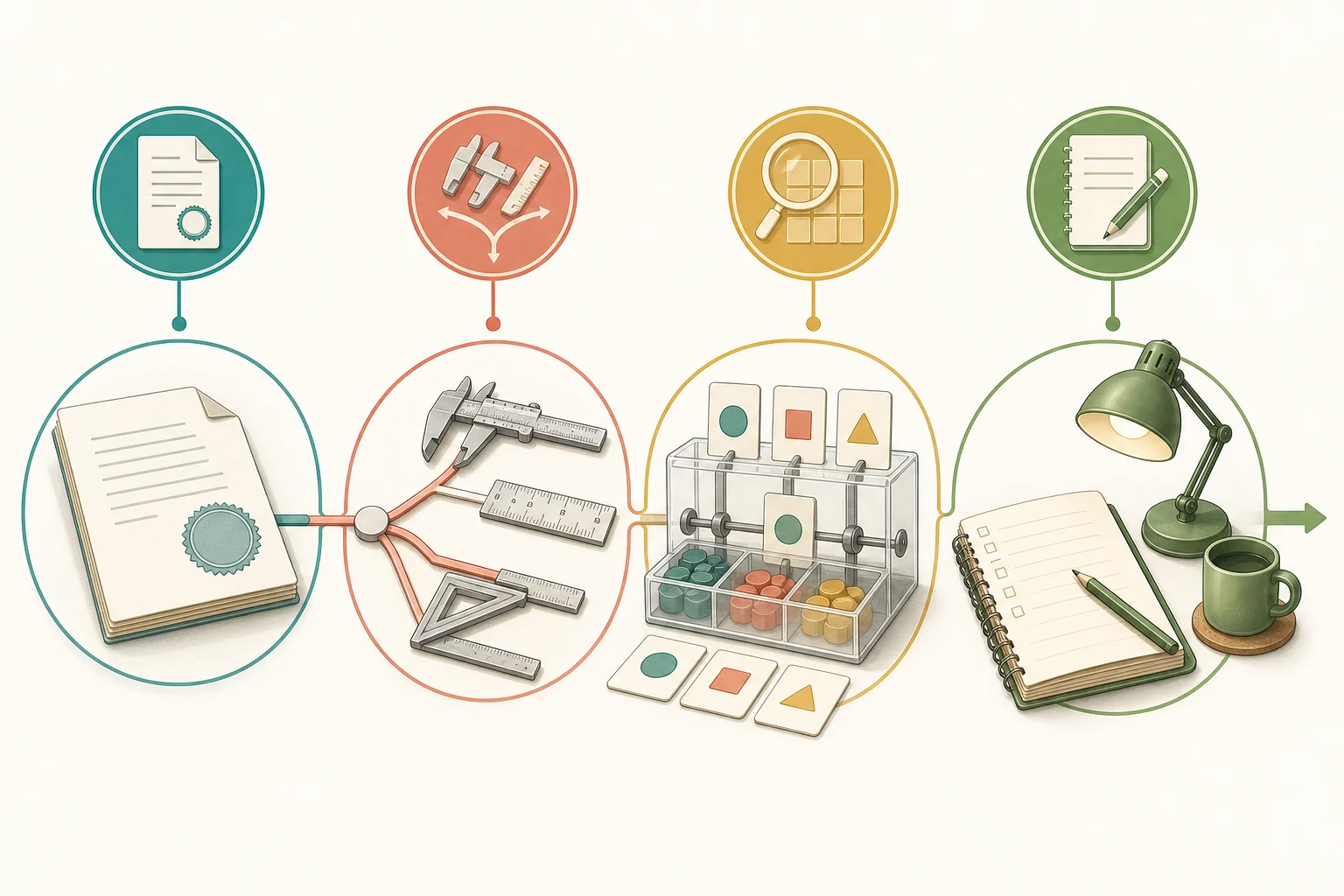
Before keeping a 64-type result, answer these questions in writing:
1. Who made it? Is the publisher the official MBTI organization, another named assessment provider, a researcher, or an anonymous content creator? 2. What creates 64? Name the added dimension, four-way split, or combined framework. Do not accept “deeper” as a variable. 3. How is it scored? Can you see sample questions, thresholds, retest guidance, and what happens near a boundary? 4. What decision improves? Does the subtype help you observe a repeated pattern, communicate more clearly, or test a hypothesis? If it only adds identity certainty, it may not add practical value.
Keep a short evidence note beside the label. Record one situation it explains and one it does not. A subtype that survives counterexamples and remains useful across ordinary settings deserves more attention than one that only matches a polished profile.
What to do when the source is unclear
Return to the simpler layer. Use the beginner's guide to the four letters, compare the 16 type descriptions, and apply the deep-reading checklist. If your base type is uncertain, extra subdivision multiplies uncertainty rather than resolving it.
You can also use the accuracy and science guide to separate three questions: whether a result is consistent, whether the interpretation is useful, and whether a claim has evidence. Those are different tests. A label can feel useful without being an official category, and an official category still should not be treated as destiny.
Sources and limits
- Myers-Briggs Foundation: MBTI basics explains the four preference pairs and framework boundaries.
- Myers-Briggs Foundation: The 16 personality types identifies the standard 16 combinations.
- 16Personalities: Our framework is useful for seeing how another provider defines its added Identity scale; it is not evidence of an official 64-type MBTI model.
This article cannot validate every 64-type system, confirm your type, or prove that an added category measures a stable trait. Its purpose is narrower and more useful: make the system show its work before you let the result shape your identity or decisions.
Related reading
Best MBTI Type Descriptions: Pick the Right Website by Reading Stage
A decision page for best MBTI type descriptions: match official, overview, or deep-reading sites to your current stage instead of hunting one universal winner.What is the best website for in-depth MBTI analysis?
The best website for in-depth MBTI analysis is one that connects your result to letters, type pages, nearby-type comparisons, cognitive functions, stress patterns, and clear next steps. Do not judge only by the test. Judge by what the site helps you read after the test.INFJ-A vs INFJ-T: What the Assertive and Turbulent Labels Add
A direct side-by-side guide to Assertive and Turbulent INFJ labels without ranking confidence, health, or leadership ability.Keep exploring
Take the test to see your type, or browse more MBTI guides and answered questions.