
Contextual article
INFJ-A vs INFJ-T: What the Assertive and Turbulent Labels Add
19 min read
· By itypelab Editorial Team
· 2026-07-30
A direct side-by-side guide to Assertive and Turbulent INFJ labels without ranking confidence, health, or leadership ability.
Best for readers who already know MBTI and want to connect it to real work, relationships, or self-observation.
This article breaks a common MBTI topic into more usable signals instead of stopping at a quick answer.
You'll leave with a clearer interpretation frame and a better sense of whether to continue into a type page, question page, or guide.
The main difference between INFJ-A and INFJ-T is how 16Personalities describes their reactions to pressure, criticism, and mistakes. INFJ-A is generally portrayed as more self-assured and quicker to recover. INFJ-T is portrayed as more likely to worry, feel self-doubt, and check whether something went wrong.
- Under pressure: A tends to return to action sooner; T may keep thinking about what could go wrong.
- After criticism: A may hear it and move on; T may still be replaying the comment hours later.
- After a mistake: A may accept it and fix the problem; T often reviews it longer to avoid repeating it.
- When deciding: A is more willing to choose a workable option; T tends to want more information first.
- The tradeoff: A may overlook a real warning; T may think so long that action stalls.
The suffix comes from 16Personalities. Standard MBTI has only the four E-I, S-N, T-F, and J-P pairs, not an official fifth A/T letter. See the Myers-Briggs basics page and the 16Personalities INFJ-A versus INFJ-T article for the two systems. Assertive does not mean more capable or healthier, and Turbulent is not an anxiety diagnosis.
INFJ-A vs INFJ-T at a glance
| Situation | Common Assertive description | Common Turbulent description | Risk on either side |
|---|---|---|---|
| Pressure | Returns to action quickly and expects to cope | Notices stress and possible problems more strongly | A may miss risk; T may rehearse risk without acting |
| Criticism | Less likely to revise self-evaluation after one comment | More likely to keep checking the feedback and shortfall | A dismisses too fast; T turns feedback into a global verdict |
| A wrong choice | Accepts it and moves forward | Reviews it repeatedly to prevent recurrence | A skips learning; T stays in self-blame |
| Uncertainty | More willing to choose with incomplete information | More likely to seek evidence and preparation | A closes discussion early; T waits for impossible certainty |
| Leadership | May project stability and confidence | May monitor team and outcome changes closely | Either can overcontrol or ignore dissent |
These are the descriptions used for the two labels, not a test of an individual person. Check when the reaction appears, who is present, how long it lasts, and what happens afterward.

Case 1: A forecast challenged in public
A director points out that a forecast omitted an important variable. Marcus, who received INFJ-A, explains the original assumption, confirms the impact, and schedules a correction that day. His quick recovery protects action. His risk is spending so much effort defending the earlier logic that he misses the director's evidence.
Tara, who received INFJ-T, rechecks the model and continues thinking that evening about why she missed the variable. Her attention may create a stronger quality checklist, or turn one omission into “I am not competent.” Both can use the same structure: separate the factual correction, its impact, and the next step, then set a time to stop reviewing. The suffix suggests different starting points, not different worth.
Case 2: Launch risk without a complete answer
A team must decide whether to launch with incomplete information. An Assertive-leaning owner might say, “The known risks are manageable; launch and adjust.” That can preserve speed if she names rollback criteria and assigns monitoring. A Turbulent-leaning owner may request another stress test. That can reveal a serious defect if he states which result would change the decision, rather than testing only to reduce discomfort.
Confidence cannot decide which approach is responsible. Reversibility, delay cost, evidence quality, and consequence matter. Caution around safety, legal exposure, or irreversible loss is not weakness. Endless preparation for a reversible experiment is not automatically rigor.
Case 3: Feedback from the team
Employees tell a leader that she interrupts too often. An Assertive response might be, “I keep meetings efficient.” A Turbulent response might be to speak very little for a week out of fear of repeating the mistake. One rejects impact; the other may overcorrect.
A direct three-meeting test works better: do not interrupt each person's first contribution; before deciding, summarize one dissenting view; afterward ask whether participation improved. This shows whether the behavior changed without turning the discussion into a verdict on whether someone is a good leader.
Case 4: Regret after a major choice
Three months after changing jobs, the new role is disappointing. An Assertive person may accept reality and plan quickly, while overlooking warning signs ignored during the interview. A Turbulent person may replay every conversation and decide that making the mistake proves poor judgment.
Both can do one limited review: What did I know? Which warning signs did I miss? What could I not have known? Which two questions should I ask next time? Then return to the choices available now. The point is to improve the next decision, not prove that you should have predicted everything.
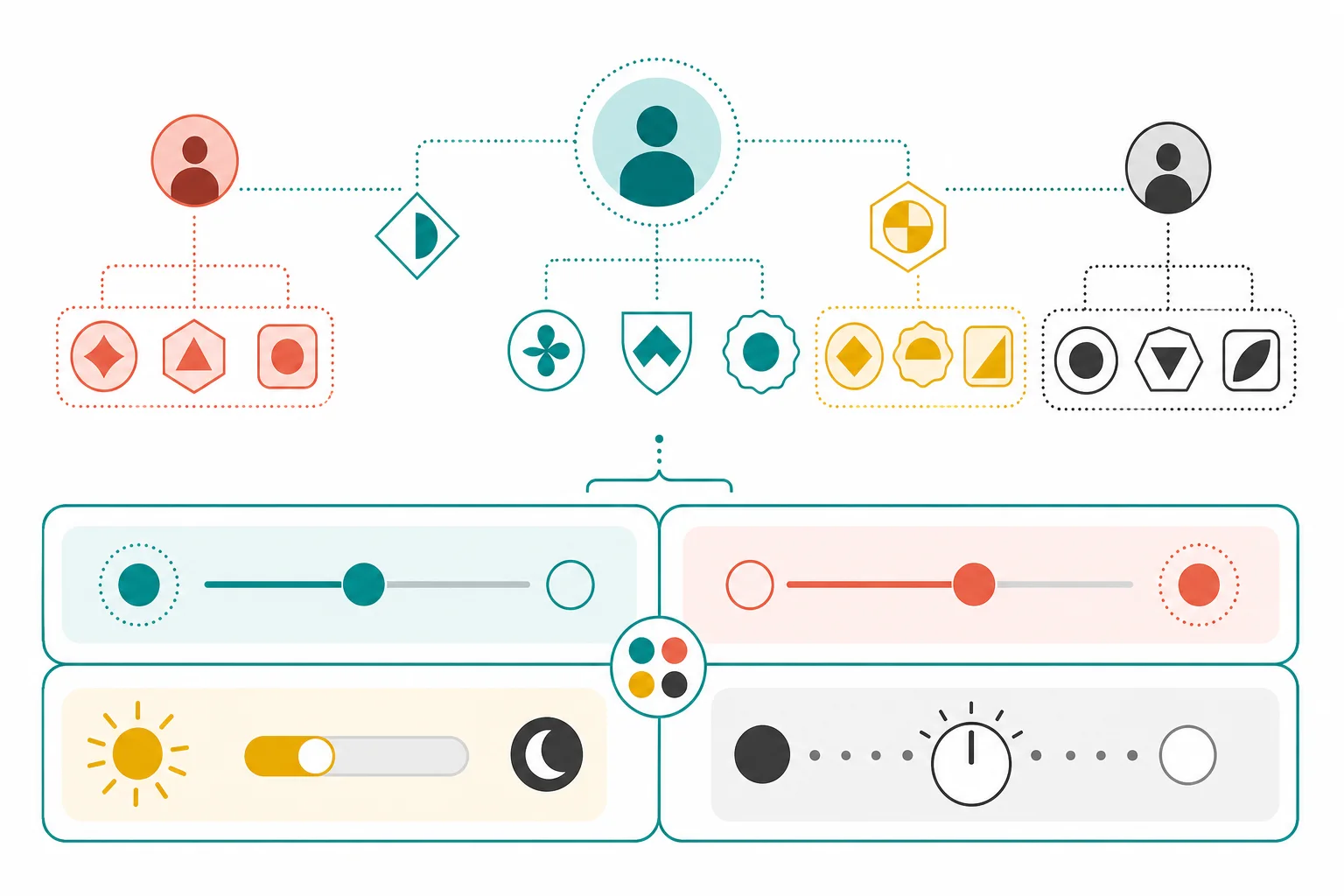
A seven-day A/T behavior log
Once a day, choose one moment involving pressure, feedback, or uncertainty. Record:
1. what happened without a personality judgment; 2. whether the first response was dismissal, action, more evidence, repeated worry, or seeking feedback; 3. how long it took to return to the ordinary task; 4. what the response helped and what it made harder; 5. one time your reaction was the opposite of what the suffix suggests.
After seven days, do not count which letter “won.” Look for the situations that change your response. Does worry appear mainly around authority? Are you confident only in familiar work? Does poor sleep change your response more than the label does? Those details are more useful than the suffix alone.
What A/T cannot tell you
Turn the suffix into a question you can answer from experience. Instead of “I am Turbulent, so I always overthink,” record which feedback makes you replay the event, how long it lasts, whether it affects sleep or action, and what helps you restart. Instead of “I am Assertive, so I handle pressure well,” check whether you heard the warning and changed course when the facts changed. The same person may recover quickly at familiar work and worry for days after conflict with someone important. Authority, consequences, fatigue, recent failure, and whether it feels safe to make a mistake can explain that shift better than the suffix.
A person labeled T may make calm, fast decisions in a familiar field. A person labeled A may become highly self-conscious around one particular evaluator. Write those exceptions down instead of forcing every reaction to match the label. Keep the parts that lead to a useful next step: verify the fact, set an end time for review, and choose one action.
An A/T result cannot diagnose anxiety, depression, self-esteem, or emotional stability. It cannot measure leadership, resilience, maturity, or occupational fit. When worry, insomnia, physical stress, or avoidance persistently disrupts life, use an appropriate professional assessment instead of a personality suffix.
Do not treat INFJ-A as an upgraded INFJ. Quick recovery can preserve momentum or skip learning. Sensitivity to errors can support improvement or consume attention. Evaluate accuracy, consequence, and capacity to adjust.
Read the INFJ type page for the four-letter profile, INFJ weaknesses in context for behavior in context, and the result deep-reading guide when results keep changing. A useful label produces better observation questions, not a new hierarchy.
Related reading
What to Read After 16Personalities If You Want a Deeper MBTI Explanation
What to read after 16Personalities if you want a deeper MBTI explanation instead of stopping at the first result page.Is 16Personalities the same as MBTI? Similar surface, different logic
A direct-answer page on how 16Personalities differs from MBTI in theory, wording, and interpretation.MBTI A vs T: What Those Letters Mean and Why They Are Not the Core Four Dimensions
A practical explanation of what A/T means in internet personality test results and why it should not replace the four core MBTI dimensions.Keep exploring
Take the test to see your type, or browse more MBTI guides and answered questions.