
Contextual article
INFP Occupations: Common Roles and the Work Conditions That Matter
18 min read
· By itypelab Editorial Team
· 2026-07-29
A practical guide to writing, counseling, UX research, design, education, nonprofit work, and other possible INFP career directions.
Best for readers who already know MBTI and want to connect it to real work, relationships, or self-observation.
This article breaks a common MBTI topic into more usable signals instead of stopping at a quick answer.
You'll leave with a clearer interpretation frame and a better sense of whether to continue into a type page, question page, or guide.
INFP occupations worth exploring include writer, editor, content strategist, UX researcher, UX designer, counselor, school adviser, social worker, teacher, curriculum designer, translator, librarian, archivist, and nonprofit program coordinator. This is a candidate list, not a ranking of the best jobs for a type. Each direction still needs a check of daily tasks, qualifications, pay and opportunity, emotional load, feedback, and autonomy.
Interest in meaning and creativity does not guarantee satisfaction in a creative industry. Being the friend who listens well does not qualify someone to practice counseling. Use O*NET to inspect tasks, skills, and work context, and the Occupational Outlook Handbook to check typical duties and education requirements. The 16Personalities INFP careers page reflects familiar search expectations, but it is not evidence that type predicts performance.
Occupation families and the work behind the title
| Direction | Typical work | Conditions to verify |
|---|---|---|
| Writer, editor, content strategist | Research, interview, draft, revise, align with audience and goals | Deadlines, commercial constraints, revision volume, income stability |
| UX researcher | Plan studies, recruit, interview, analyze, communicate evidence | Research access, sample quality, influence on decisions |
| UX designer | Map flows, design options, test, collaborate with product and engineering | Critique cycles, tool skill, portfolio expectations, implementation limits |
| Counselor | Assess, listen, document, intervene, maintain professional boundaries | Local degree and license rules, supervision, caseload, crisis responsibility |
| Education and student services | Teach or advise, monitor progress, coordinate resources | Class or caseload size, administrative time, authority, qualifications |
| Social work and nonprofit programs | Support clients, connect resources, run programs, report to funders | Emotional exposure, staffing, funding stability, safety procedures |
| Translation and localization | Interpret context, translate, manage terminology, assure quality | Subject expertise, deadlines, tools, rate structure |
| Library and archive work | Organize collections, support research, preserve and retrieve information | Degree requirements, systems work, number of openings |
| Market insight and brand research | Study audiences, synthesize findings, connect evidence to strategy | Sales pressure, evidence standards, product ethics |

A job title is not a workday
Words such as “content,” “research,” and “helping people” can hide very different routines. A content role may protect time for interviews and long-form editing, or demand three reactive posts every day plus sales leads. A research team may influence product strategy, or only validate decisions already made. A helping profession may offer strong supervision, or leave one worker with an unsafe caseload.
Do not stop at a personality career list. Open three current job postings and circle the task verbs: write, sell, document, interview, coordinate, analyze, present, schedule. Estimate which ones fill most of the week. Then examine qualifications and accountability.
Case 1: Two content strategist jobs
Maya likes interviewing experts, clarifying complex material, and revising a draft until a reader can use it. Job A produces four substantial articles a month, includes editorial feedback, and has a research budget. Job B expects three trend-driven posts a day, short-form video, social distribution, and marketing-qualified leads.
Both positions say “content strategist.” Their task mix and success measures are different. Maya should ask about weekly volume, who controls revisions, whether research time appears in planning, and whether success means depth, traffic, or sales. If she enjoys rapid experimentation, Job B may fit. An INFP label should not eliminate it on her behalf.
Case 2: Becoming a counselor because friends confide in you
Noah listens carefully, and friends often bring him personal problems. He assumes counseling must be his ideal occupation. The professional job also includes trained assessment, confidential documentation, ethics, consistent boundaries, risk recognition, and supervision. Empathy does not by itself authorize clinical responsibility.
His next step is not an immediate resignation and degree application. He can map local licensing rules, interview two practitioners about caseload and paperwork, and explore support roles without the same clinical scope. Discovering that education, resource navigation, or mental-health writing fits better would be useful evidence, not failure.
Case 3: A UX researcher whose findings change nothing
Leah enjoys interviews and finding a pattern beneath contradictory answers. At her new company, research occurs only after the roadmap is fixed. Reports look polished, but nobody owns the follow-up.
The issue is not that “business is wrong for INFPs.” Responsibility for evidence is separated from decision authority. In an interview, Leah can ask: What was the latest decision changed by research? Who attends a research playback? Can researchers shape the initial question? If the organization mainly wants confirmation, she can decide whether that is work she accepts.
Case 4: A compelling mission with damaging conditions
Evan believes deeply in a nonprofit's mission. Once hired, he carries a large client load, fundraising events, and weekend hotline shifts without stable supervision or a clear escalation path. He works longer because the mission matters, until he feels numb when clients call.
Meaning cannot cancel unsafe staffing. He needs evidence about caseload limits, crisis support, schedule compensation, decision authority, and whether leave is usable. An organization that treats sacrifice as proof of commitment may be exploiting the very values that attracted him.
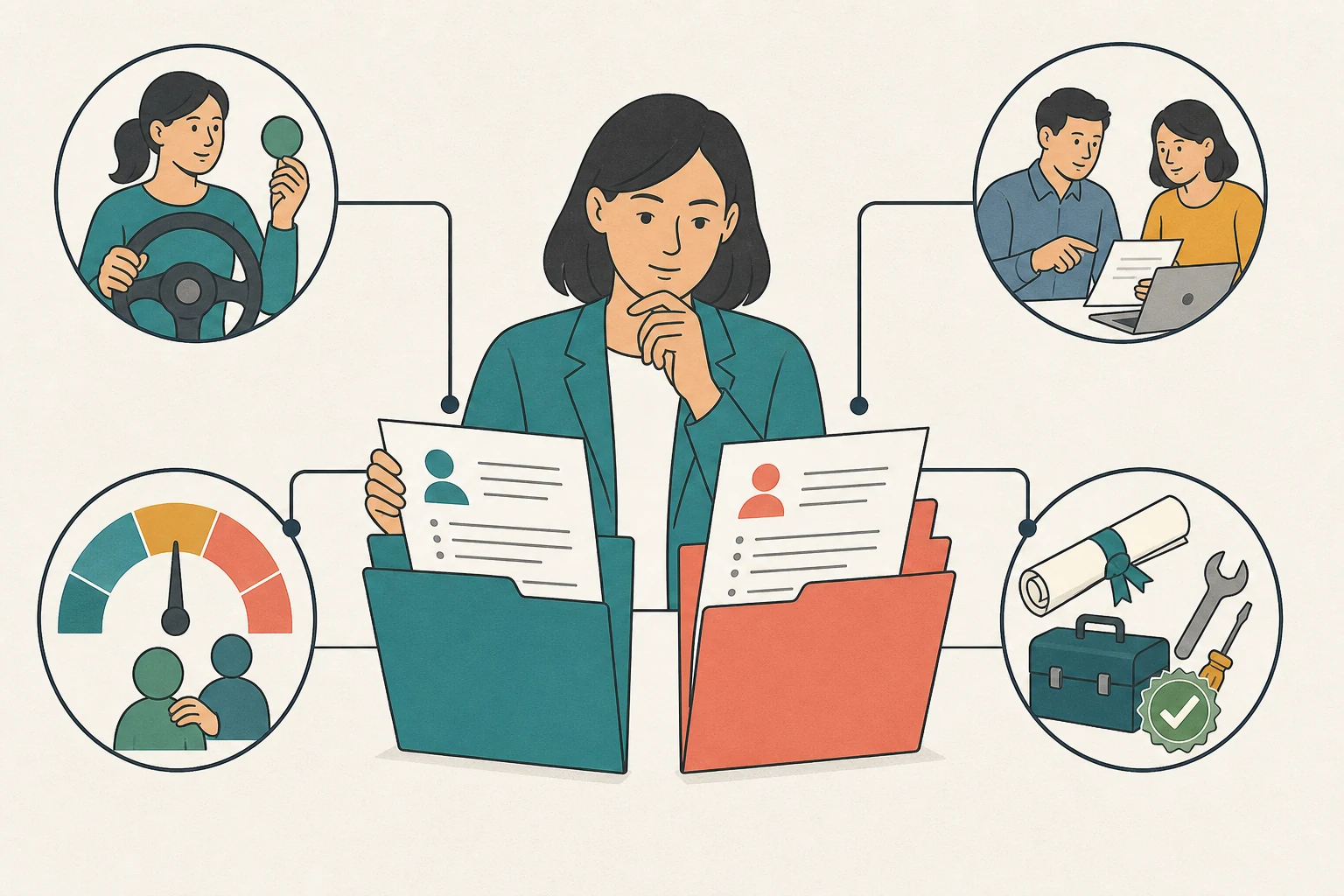
A five-part job posting audit
Use one real job posting and answer these questions:
1. **Daily tasks: What fills most of the week: writing, selling, records, coordination, analysis, or meetings? 2. Qualifications: Which licenses, degrees, tools, and work samples are required rather than preferred? 3. Autonomy and feedback: Who defines good work, how often is feedback given, and can you influence the outcome you own? 4. Emotional load: How much conflict, distress, refusal, persuasion, or constant friendliness is expected? 5. Practical conditions:** Are pay, location, schedule, contract stability, and growth options workable?
Record evidence, not a mood. “Supports 15 client projects and reports conversion weekly” is more informative than “fast-paced culture.” Use the interview to test what the posting leaves out.
Questions to ask in an interview
- What three activities occupied this role most often last month?
- Tell me about the latest priority change. Who made it, and how was it explained?
- Which measures define success, and when do quality and volume conflict?
- Who shares responsibility in a high-emotion or high-risk situation?
- What task do new hires most often underestimate?
- Why have people left this role?
When every answer relies on passion, mission, flexibility, or resilience without naming tasks, resources, and authority, keep asking.
Read the INFP type page for the broader profile, the INFP weaknesses guide if perfectionism or boundaries affect work, and the career guidance source guide when comparing recommendations. A career list should produce possibilities. A sound decision comes from actual tasks, qualifications, and sustainable conditions.
Related reading
Is MBTI Accurate? Research Limits, Predictive Validity, and How to Use It
MBTI can describe preference patterns; it is a weak predictor of performance, romance, or clinical outcomes. This guide separates descriptive value from predictive validity.Why do my MBTI results keep changing? What usually causes it, and what to do next
A direct-answer MBTI question page about result changes, state effects, close dimensions, and better next steps.ISTJ Careers: 10 Common Directions and the Work Conditions That Matter
Accounting, compliance, operations, logistics, quality, data, records, legal support, healthcare administration, and maintenance are options to investigate, not type-based assignments.Keep exploring
Take the test to see your type, or browse more MBTI guides and answered questions.