
Contextual article
ENTP Women: How Gender Expectations Distort the Type
17 min read
· By itypelab Editorial Team
· 2026-07-29
A stereotype-resistant guide to ENTP women that distinguishes observable behavior, role power, skill, safety, and biased evaluation.
Best for readers who already know MBTI and want to connect it to real work, relationships, or self-observation.
This article breaks a common MBTI topic into more usable signals instead of stopping at a quick answer.
You'll leave with a clearer interpretation frame and a better sense of whether to continue into a type page, question page, or guide.
ENTP women may commonly be described as exploring new ideas, using debate to test a claim, spotting alternatives quickly, questioning inherited rules, and challenging inefficient systems. Common misreadings call them argumentative, unfeminine, unstable, too ambitious, or uncaring. Sometimes criticism identifies a real impact. Sometimes gender expectations change the label: direct disagreement may be read as decisive from a man and abrasive from a woman.
There is no single ENTP female personality. One woman may be socially energetic; another becomes animated only around a familiar subject. One may enjoy public debate; another tests ideas through writing. Some want organizational leadership, while others care primarily about professional autonomy. The official Myers-Briggs type overview does not include gender roles. Role congruity research discusses general bias in evaluations of women leaders, but it cannot prove one ENTP woman's experience or motive.
Common patterns, common misreadings, and missing evidence
| Observable pattern | Common misreading | Evidence still needed |
|---|---|---|
| Questions assumptions and offers a counterexample | She argues for attention | Does she hear evidence and help reach a decision? |
| Produces alternatives quickly | She is inconsistent | Does exploration narrow into execution? |
| Challenges a rule directly | She is difficult to manage | Is the rule justified, and does she offer a viable alternative? |
| States ambition openly | She is aggressive or self-centered | What do results, skill, and impact on others show? |
| Refuses default caretaking | She is cold | Is responsibility shared, and can care take another form? |
| Invites debate in leadership | She creates conflict | Does dissent reveal risk, and does someone ultimately decide? |
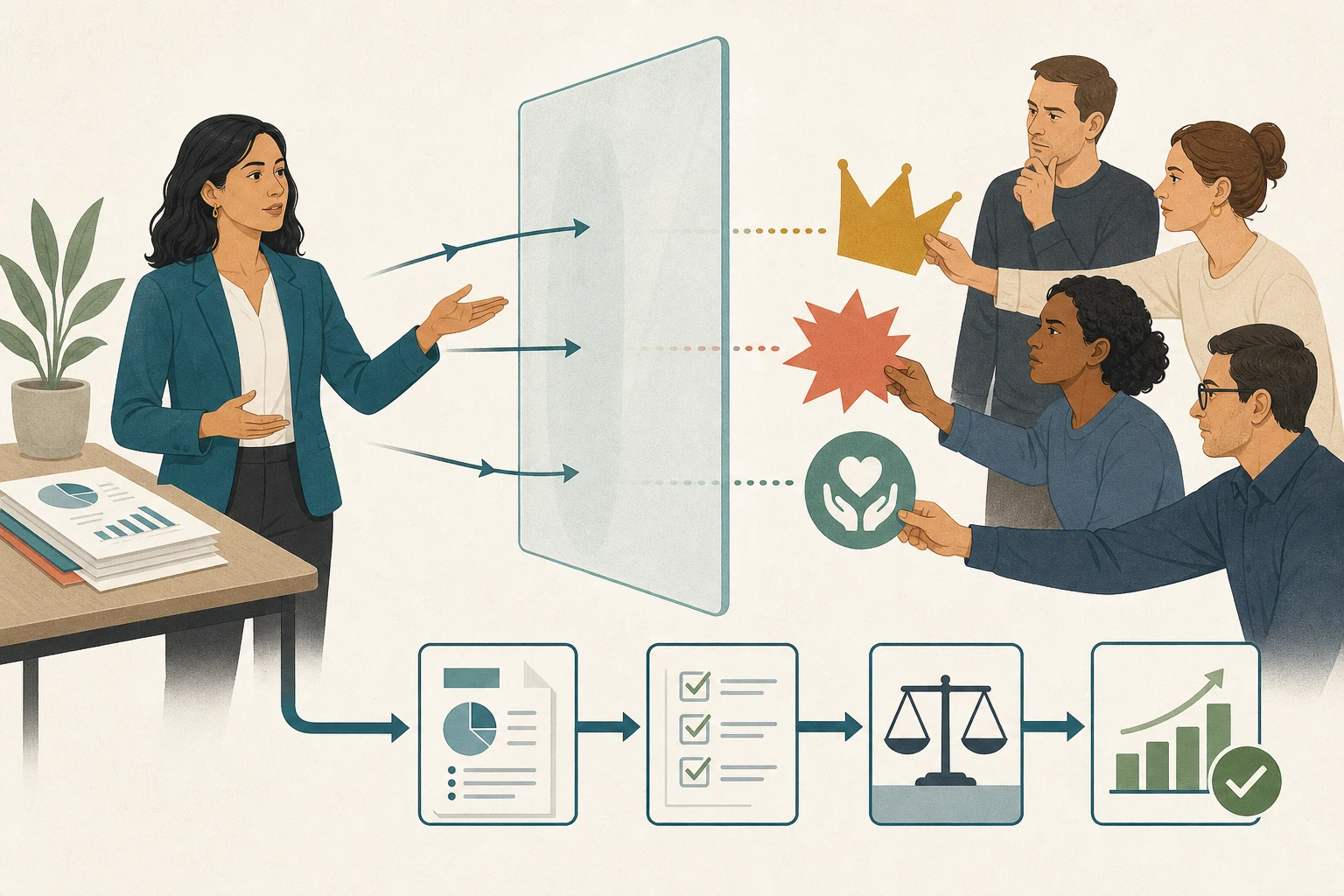
Debate is not automatically disrespect
Debate can be a method for understanding: create an opposing case and see where the claim stops working. But someone who interrupts, hunts only for weakness, and refuses responsibility for a conclusion creates a real cost for other people.
Evaluate the whole cycle. Can she summarize the other view accurately? Can evidence change her mind? Does the discussion end in a choice and an owner? If not, those are behaviors to improve. If she does all three and is still told to be less intimidating, compare how the group evaluates a man using the same approach.
Case 1: The counterexample nobody wants in the meeting
A product team is enthusiastic about a new feature. Keira asks, “If users do not understand the entry point, what evidence will tell us that this idea worked?” Her manager says she is always negative. Two weeks later, a usability test finds that users cannot locate the entry point.
Being right later does not make every objection useful, and discomfort does not make an objection wrong. The team can require dissent to include a risk, evidence, and a minimum test. Keira can connect the counterexample to the shared goal: “We all want adoption. I think comprehension comes first, so I propose a five-user test.” The question becomes work rather than a personality contest.
Case 2: A sales leader states her ambition
Rina says she wants responsibility for a larger region. She brings four quarters of results and records showing how she developed her team. Colleagues call her too eager for status. A man announcing a similar goal is described as having leadership drive.
Gender expectations may be shaping the evaluation. There may also be legitimate questions about management. Use the same criteria for both candidates: are results sustainable, what is team retention, who has been developed, and what evidence shows cross-functional trust? Ambition should not trigger a penalty, and concern about bias should not eliminate a fair capability review.
Case 3: Every supportive conversation becomes an argument
A friend says she is exhausted. Lena immediately questions the job choice and offers five alternative explanations. Lena believes she is opening possibilities; her friend feels cross-examined.
Gender expectations do not excuse this impact. Lena can ask, “Do you want listening, help organizing what happened, or new options?” When listening is requested, she pauses the hypothesis testing. If both people choose analysis, they can make clear that the goal is shared understanding rather than victory. Curiosity is supportive only when the other person consents to participate.
Case 4: A leader invites debate but never closes it
Team lead Morgan encourages everyone to challenge each proposal. Every meeting creates a new direction, but two weeks later nobody knows which work to begin. She treats openness as her leadership strength while the team carries the ambiguity.
Useful debate needs an ending rule: generate options, filter them through public criteria, name the final decision-maker and time, then record which new evidence can reopen the choice. If Morgan consistently completes that cycle, debate can improve quality. If closure always feels like a loss of freedom, other people are paying for her interest in exploration.
A five-step stereotype check
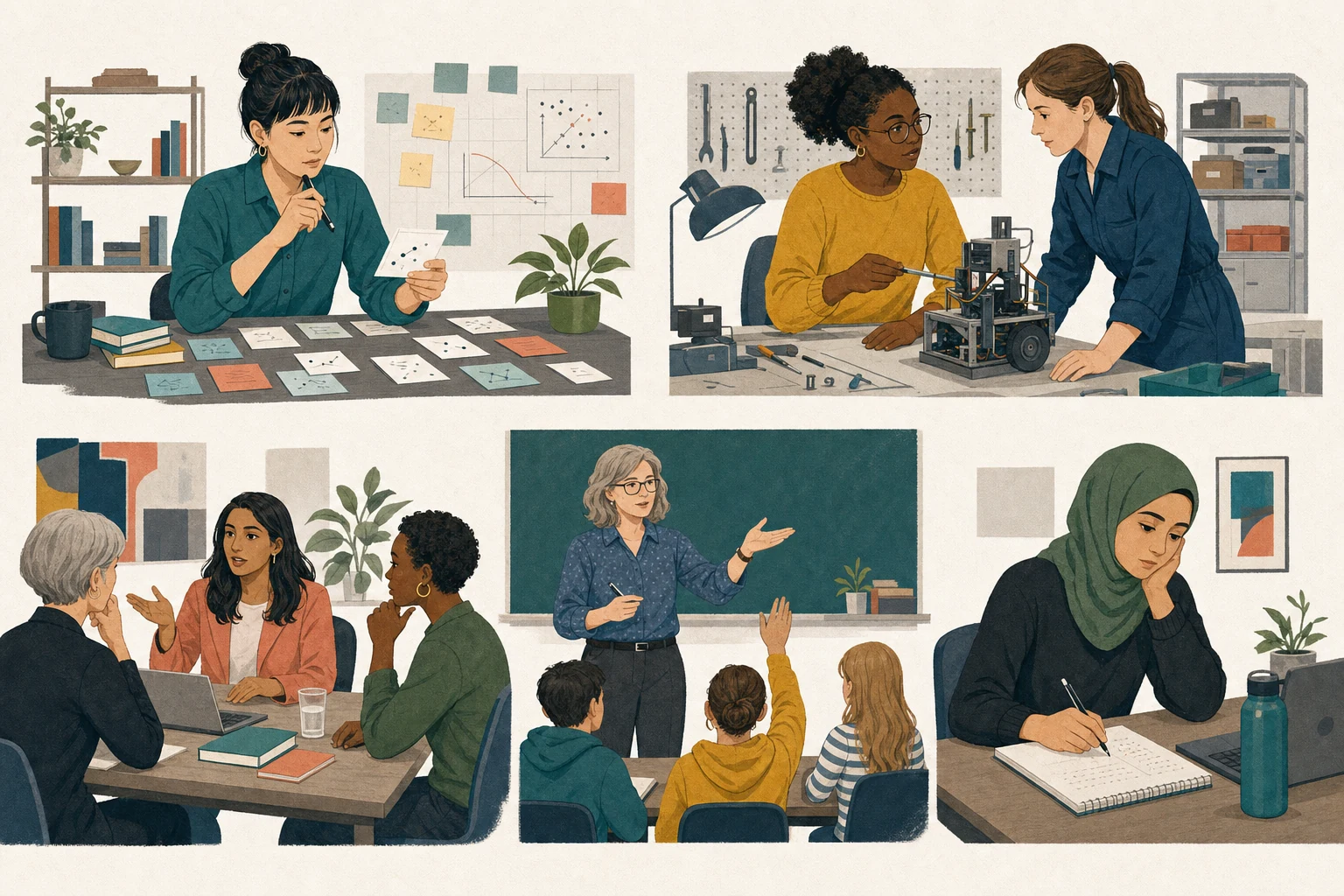
1. Write the behavior: What exactly did she say or do, without “aggressive” or “difficult”? 2. Check preference: Does exploring alternatives or testing logic repeat in safe settings? 3. Check role: Did she have decision authority, and was she responsible for the result? 4. Check gender expectations: Would the label or consequence change if a man did the same thing? 5. Find a counterexample: Where does she listen quietly, finish, care for others, or accept another view?
Counterevidence is not an attempt to invalidate her test. It prevents a label from consuming the person. An ENTP woman may dislike public speaking but challenge assumptions brilliantly in writing. She may value stable procedures because her professional work requires reliability. She may care deeply for family while refusing to become everyone's automatic emotional service.
Do not replace one stereotype with “the clever rebel”
Rejecting the “too forceful” stereotype can create another: ENTP women are fearless, witty, anti-tradition, born entrepreneurs, and always the best debater in the room. That picture still erases skill, culture, resources, interest, and safety.
An ENTP result does not establish intelligence, creativity, leadership, or career direction. Leadership still requires hearing dissent, deciding, assigning responsibility, and owning consequences. Innovation still needs evidence, implementation, and review. Gender bias deserves scrutiny, and individual behavior still deserves the same fair standards.
Continue with the ENTP type page, common ENTP misconceptions, and INTJ women and gender stereotypes for comparison. An accurate description must allow a clear counterexample: “This does not describe her.” Without that freedom, it is a stereotype rather than an explanation.
Related reading
MBTI Four Dimensions Explained — A Complete Deep Dive
A thorough exploration of all four MBTI dichotomies, covering real definitions, persistent misconceptions, practical self-identification tips, and how the dimensions combine to shape each unique type.Is MBTI accurate? What it can help with, and what it should not replace
A question page about MBTI accuracy, usefulness, and limitations.INFJ Women: Common Traits, Misreadings, and Gender Expectations
A stereotype-resistant guide to INFJ women that separates personality preferences from gender expectations, role pressure, skill, and safety.Keep exploring
Take the test to see your type, or browse more MBTI guides and answered questions.