
Contextual article
ENFP Compatibility: Common Pairings and What Makes Them Work
33 min read
· By itypelab Editorial Team
· 2026-07-30
A practical comparison of four commonly discussed ENFP pairings without pretending MBTI can rank relationship success.
Best for readers who already know MBTI and want to connect it to real work, relationships, or self-observation.
This article breaks a common MBTI topic into more usable signals instead of stopping at a quick answer.
You'll leave with a clearer interpretation frame and a better sense of whether to continue into a type page, question page, or guide.
The ENFP pairings discussed most often are INFJ, INTJ, ENFJ, and INFP, but each pairing appeals for a different reason.
| Pairing | Common source of attraction | Most common friction |
|---|---|---|
| ENFP + INFJ | ENFP brings fresh options and momentum; INFJ helps find a long-range direction | ENFP changes plans; INFJ wants an earlier decision |
| ENFP + INTJ | ENFP opens more possibilities; INTJ turns an idea into a plan | ENFP feels controlled; INTJ feels nothing gets finished |
| ENFP + ENFJ | Both tend to show warmth, initiative, and concern for the relationship | Too many social plans, or ENFJ decides for both people too quickly |
| ENFP + INFP | Both may value honesty, personal meaning, and imagination | Both avoid pressure, so conflict and commitment stay unspoken |
An ENFP who enjoys intellectual challenge and clear plans may prefer an INTJ. Someone who wants quiet depth and a shared long-range direction may prefer an INFJ. An ENFP who wants high interaction and an active social life may enjoy an ENFJ, while someone who needs gentler pacing and personal space may feel closer to an INFP. There is no reliable success-rate ranking; honesty, responsibility, boundaries, and repair after conflict matter more than the four letters.

The four common ENFP matches: the actual point of fit
| Pairing | Common function order | Concrete complement | Main coordination risk |
|---|---|---|---|
| ENFP + INFJ | ENFP `Ne-Fi`; INFJ `Ni-Fe` | ENFP opens alternatives; INFJ helps identify a long-range direction | Possibility can feel unreliable; direction can feel like premature closure |
| ENFP + INTJ | ENFP `Ne-Fi`; INTJ `Ni-Te` | ENFP expands options; INTJ turns a chosen direction into structure | Analysis can become dismissal, or structure can feel controlling |
| ENFP + ENFJ | ENFP `Ne-Fi`; ENFJ `Fe-Ni` | Both may bring warmth and initiative while checking values differently | Social pace and group decisions can crowd out private needs |
| ENFP + INFP | Shared `Fi-Ne` processes in a different order | Both may understand personal meaning and imaginative options | Plans and conflict can stay vague when neither makes the final choice |
This table explains why people discuss these pairings; it does not report relationship success rates. The Myers-Briggs Foundation's overview of the 16 types explains the four letters but does not publish a scientifically proven best-match table. The 16Personalities ENFP relationships page shows common online descriptions but cannot predict whether a particular couple will last.
ENFP and INFJ: warmth plus possibility
This pairing is popular for an understandable reason. ENFP often brings movement, play, people, and alternatives. INFJ often brings focus, pattern recognition, and a desire to understand where an experience is leading. The ENFP may help an INFJ stop overthinking and try something new. The INFJ may help an ENFP decide which possibility deserves sustained attention.
The match comes from opening possibilities and choosing a direction. ENFP `Ne-Fi` often notices several interesting paths and checks which feels personally meaningful. INFJ `Ni-Fe` is more likely to pull different signals into one likely direction and consider what it means for the relationship. ENFP can remind INFJ that one prediction is not inevitable; INFJ can help separate an exciting option from a direction worth sustained attention.
Both care about feelings, but they may focus on different questions. ENFP is more likely to ask, “Is this what I genuinely want?” INFJ is more likely to notice, “What will this do to our relationship?” At their best, one stops harmony from erasing honest preferences, while the other helps the pair say what each person has been assuming.
Case 1: planning a weekend
An ENFP sends six possible plans on Friday afternoon: a market, a hike, a dinner, a gallery, a friend's party, or no plan at all. One INFJ enjoys the invitation but becomes tired by the unresolved options. If the ENFP reads that pause as rejection, tension grows. If the INFJ says, “I want to see you, but I need one settled plan by tonight,” the difference becomes manageable.
This pairing works better when both people agree on when a plan becomes final. The INFJ does not have to make every detail rigid, and the ENFP does not have to accept endless last-minute decisions. A simple rule such as “one fixed plan, one optional plan” often solves the problem.
Without that rule, the INFJ may keep waiting for the ENFP to choose, while the ENFP reads the unresolved plan as lack of commitment and pulls away. The fix is to say when they are still exploring options and when they will make the final choice.
ENFP and INTJ: depth plus challenge
ENFP and INTJ can connect through long conversations, unusual ideas, and the feeling that each person sees beyond the obvious. The INTJ tests an idea by pushing against it. The ENFP often tests it by tracing what it means for people and where it will lead. Together, they can expose weak assumptions and still build a larger picture.
The specific fit is opening options and building structure. ENFP `Ne-Fi` proposes different directions and checks which one feels personally meaningful. INTJ `Ni-Te` is more likely to narrow toward a long-range route and organize the steps and resources. ENFP can stop INTJ from locking onto one answer too early. INTJ can help ENFP turn a valued possibility into a workable plan.
ENFP often considers early whether a choice fits personal values and whether the conversation is damaging trust. INTJ may first test whether the conclusion and plan hold up. This can make the pair candid and interesting when trust is strong, but mismatched when one person thinks they are discussing an idea and the other is already reacting to how the conversation affects the relationship.
Case 2: a delayed reply after disagreement
An INTJ thinks a difficult conversation ended well because both people argued openly. The ENFP stops replying for half a day because the tone felt sharper than the INTJ realized. The worst interpretation is “INTJs do not care” versus “ENFPs are too sensitive.” The useful repair is specific: the ENFP identifies the sentence that crossed a line; the INTJ acknowledges the effect before explaining the intention; both agree whether debate is welcome in that topic.
This match is often strongest when the INTJ can distinguish curiosity from pressure and the ENFP can name discomfort before it becomes withdrawal. If every concern becomes a debate, the ENFP may stop feeling safe. If every disagreement becomes evidence of incompatibility, the INTJ may feel unable to be candid.
The useful tool is a debate/repair switch: “Are we exploring the idea, deciding what to do, or repairing how we spoke?” Without one mode at a time, INTJ keeps improving the argument while ENFP is already evaluating whether the relationship is safe.
ENFP and ENFJ often show warmth openly, start activities, and feel drawn to each other's energy and ideals. Both can keep a relationship moving. They can also fill the calendar too quickly or settle on a group direction before checking what each person privately wants.
ENFP `Ne-Fi` tends to open more possibilities and then ask which one feels personally right. ENFJ `Fe-Ni` is more likely to notice what the people involved need and guide the group toward one shared direction. ENFJ can make plans and expectations clearer. ENFP can remind the relationship not to sacrifice an individual's preference just to keep everyone aligned.
When considering a move, for example, ENFP may keep proposing different cities and lifestyles before deciding which one feels right. ENFJ may start mapping the needs of the partner and family and push for one direction everyone can support. ENFP may feel that options are being closed too early; ENFJ may feel that an exciting discussion never becomes a decision.
Case 3: setting a social boundary
The couple has been invited to a demanding family weekend. ENFP wants to keep several options open, perhaps attending only part of it. ENFJ more quickly considers how to explain the choice to everyone and avoid last-minute disruption. ENFP may feel that the decision came too early; ENFJ may feel that changing options makes planning harder for everyone.
A good division of labor is possible: agree privately on what both people can manage, then let ENFP suggest options and ENFJ make the final message clear to the family.
The risk is that both people can build momentum without stopping to ask, “Do we both want this, or did everyone simply go along?” Before a major decision, each person can write down what they prefer, what they cannot accept, and where they are willing to compromise.
ENFP and INFP: values plus emotional nuance
ENFP and INFP may quickly recognize each other's seriousness about meaning, identity, and authenticity. Both can make room for feelings that other people dismiss. Creative interests and private reflection may also align well.
The match comes from shared concern for personal values and possibilities. INFP `Fi-Ne` often starts with whether something feels personally true and then explores different ways to live it. ENFP `Ne-Fi` more often starts by exploring the available paths and then checks which one fits. INFP may help ENFP slow down and name a personal need. ENFP may help INFP turn an inner wish into something the pair can actually try.
Their emotional understanding can be genuine but incomplete. INFP may offer acceptance without wanting to define the relationship yet. ENFP may feel deeply understood but still need shared direction. Neither contribution automatically supplies the other.
Similar values do not mean the two people decide in the same way. INFP may need more time before making a promise that does not yet feel certain. ENFP may look at the relationship as a whole and announce a conclusion that feels sudden to the INFP. Plans can stay vague when both people are trying not to apply pressure.
Case 4: deciding where the relationship is going
After several months, the ENFP wants to name the direction of the relationship. The INFP wants the commitment to feel completely authentic and resists a timeline. The ENFP may experience the delay as lack of shared purpose. The INFP may experience the request as pressure to manufacture certainty.
The repair is to separate the questions. “Do we care about this relationship?” is different from “What decision must we make this month?” The couple can name the current commitment, the unresolved issue, and the date for revisiting it. Clarity does not require pretending that every feeling is final.
The common problem is that both people stay polite but vague. INFP avoids a promise that does not yet feel certain; ENFP avoids applying pressure but keeps guessing what the delay means. Both can be considerate and still leave the other without a clear answer. Say what you feel now, what you can promise now, and when you will discuss the next decision.
Which kind of ENFP are you?
The same four-letter result can hide important differences. Before choosing a “best” match, notice which version of the ENFP pattern is closer to you.
Direct or delayed boundaries: Some ENFPs name discomfort early. Others absorb several incidents, form a private conclusion, and then become firm. A debate-friendly partner may work well for the first person and feel unsafe to the second unless both learn earlier repair.
Higher or lower social energy: An ENFP who enjoys frequent events may welcome an ENFJ's larger social world. Another may spend the whole relationship recovering from it. The issue is whether the couple can plan recovery without guilt.
Validation first or analysis first: Some ENFPs need emotional acknowledgment before discussing causes and solutions. Others prefer direct analysis because uncertainty is more stressful than bluntness. This difference can change whether an INFJ or INTJ feels relieving or cold.
Structured or flexible daily life: An ENFP may like clear plans yet tolerate creative changes, or may need strong predictability because work already consumes their flexibility. INFJ and INFP pairings feel different depending on how much unplanned change the ENFP can genuinely enjoy.
If your ENFP result itself feels uncertain, use the ENFP result check before treating compatibility advice as personal guidance. You can also use the nearby-type comparison method or read the broader relationship compatibility guide.
A better real-fit check
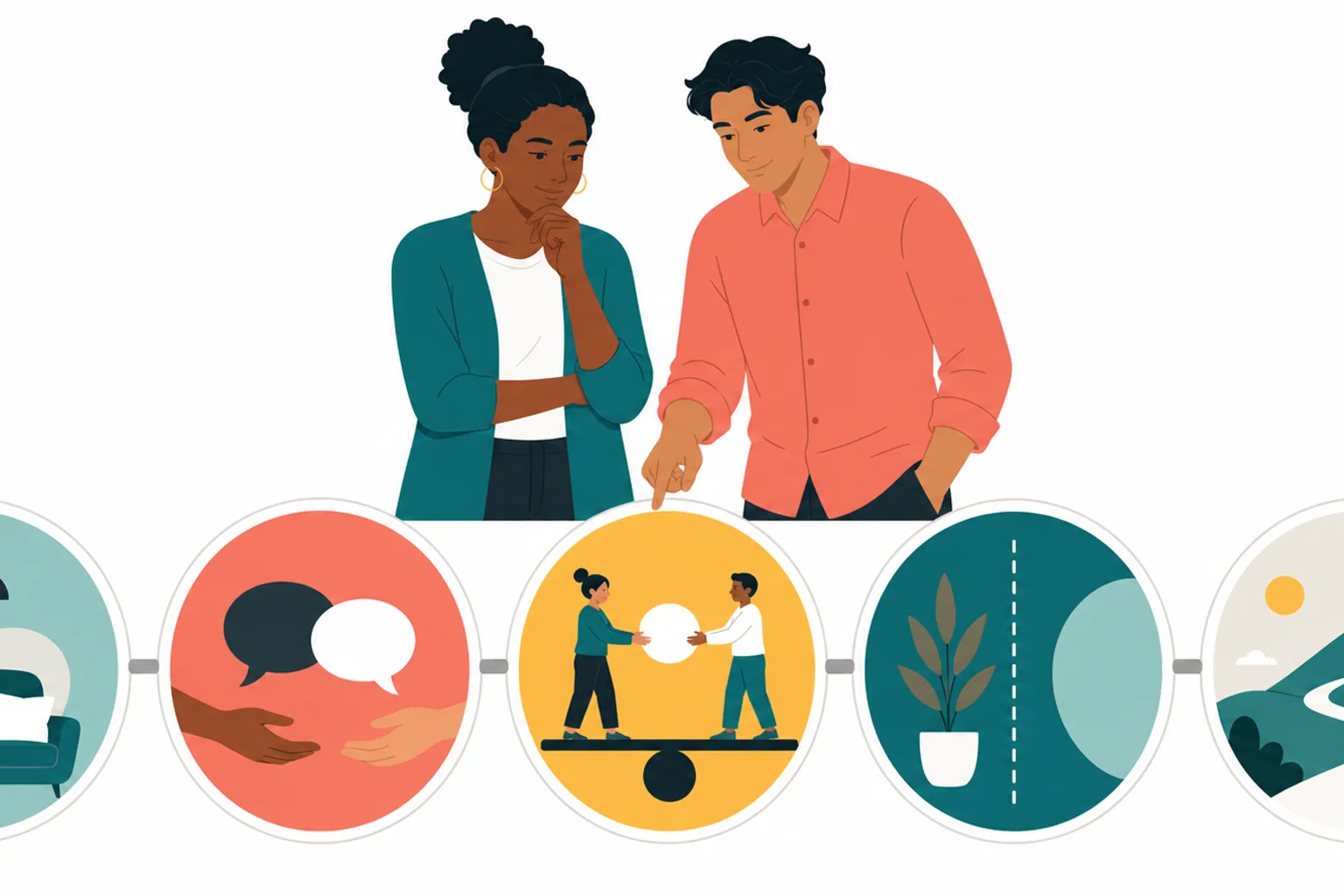
Use four questions after several ordinary interactions, not after one intense date or a profile that happens to feel accurate.
1. **Safety: Can both people disagree, slow down, and say no without punishment, ridicule, or withdrawal used as control? 2. Repair: After a misunderstanding, can each person describe their part, acknowledge impact, and change a repeated behavior? 3. Reciprocity: Does support move in both directions, or is one person always interpreting, organizing, or absorbing emotion? 4. Direction:** Can the pair make real decisions about time, commitment, money, family, and lifestyle without hiding behind type?
A commonly recommended pairing that fails these checks is not a good match. A less celebrated pairing that passes them may be much stronger. MBTI can help explain why two people misread timing, emotion, debate, or plans. It cannot replace the behavior that makes a relationship trustworthy.
The practical answer, then, is not “all types are equally likely” and not “INFJ always wins.” INFJ, INTJ, ENFJ, and INFP are reasonable places to start because they illustrate four different kinds of fit. The best match for a particular ENFP is the person whose differences remain workable in daily life and whose relationship behavior supports safety, repair, reciprocity, and a shared direction.
Related reading
MBTI Love Compatibility: A Complete Relationship Guide
This guide explains why MBTI compatibility lists are misleading, how each dimension shapes relationship conflict and connection, and how couples can use type as a communication lens.What should I read after an MBTI test result?
A question-style reading map for what to open after getting an MBTI result.Best Match for INFJ: Four Common Pairings and What Makes Them Work
A practical comparison of four commonly suggested INFJ matches, including strengths, friction, and a real-life fit check.Keep exploring
Take the test to see your type, or browse more MBTI guides and answered questions.